Hubble Learns Galactic History From Stars
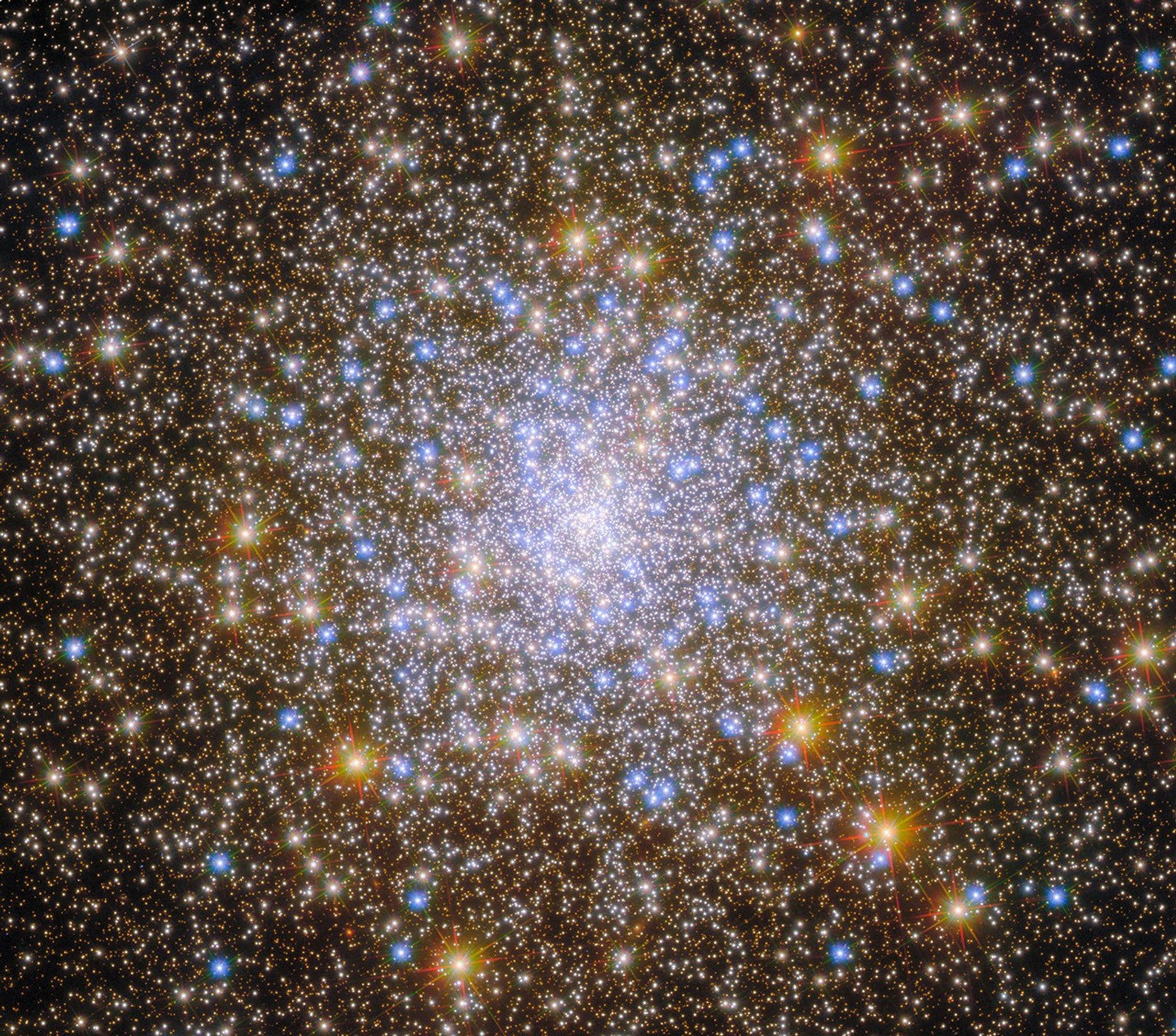
According to reporting by NASA Space & Missions, This Hubble image features the sparkling collection of stars named Messier 30 (M30), also called NGC 7099.
Hubble Learns Galactic History From Stars: Official reporting from the NASA Space & Missions confirms active developments in United States. Americans in affected communities should review primary guidance and follow verified bulletins.
“Hubble Learns Galactic History From Stars: Official reporting from the NASA Space & Missions confirms active developments in United States. Americans in affected communities should review primary guidance and follow verified bulletins.”
Key Verified Points
- •Official Issuing Wire: NASA Space & Missions
- •Editorial Desk: NASA
- •Coverage Domain: TECHNOLOGY
- •Publication Status: Verified Journalistic Dispatch
Executive Briefing
According to reporting by NASA Space & Missions, This Hubble image features the sparkling collection of stars named Messier 30 (M30), also called NGC 7099.
Detailed Factual Report
This NASA/ESA Hubble Space Telescope image provides a lesson in galactic history. The sparkling collection of stars is named Messier 30 (M30) after the French astronomer, Charles Messier , who cataloged M30 and other diffuse objects that might be mistaken for comets in the early telescopes of Messier’s time. M30 lies about 27,500 light-years away in the constellation Capricornus.
M30 is a globular cluster : a roughly spherical grouping of stars containing anywhere from tens of thousands to millions of stars. These clusters generally reside on the outskirts of galaxies, orbiting within a vast, diffuse region called the halo like a swarm of moths around a lightbulb. Our Milky Way galaxy has at least 150 globular clusters, the nearest of which is about 6,000 light-years away. These clusters are impressively ancient: astronomers estimate their ages are between 11.5 to 13.5 billion years, making certain globular clusters nearly as old as the universe itself.
Globular clusters have long played an important role in helping us learn about our galaxy. More than a century ago, astronomer Harlow Shapley used observations of a particular type of variable star to measure the locations of and distances to dozens of globular clusters within our galaxy. His work showed that the Sun is not in the center of our galaxy, and that the galactic center lies toward the constellation Sagittarius. (His distance measurements were incorrect, however, and he concluded that our galaxy is about twice as large as it really is.)
Today, astronomers continue to learn about our galaxy by observing globular clusters. Because globular clusters are so ancient, they can give us clues about how our galaxy developed long ago. Globular clusters that formed within our galaxy can act as time capsules, preserving the original chemistry of our young galaxy.
Verified Data Points & Key Takeaways
Geographic Scope & Community Impact
Recommended Action & Safety Guidelines
Source & Verification Provenance
Information in this article was compiled directly from records provided by NASA Space & Missions. Access the primary source document at: https://science.nasa.gov/missions/hubble/hubble-learns-galactic-history-from-stars/. Reporting and editorial review conducted by the USA NOW News Desk.
Event Timeline & Developments
Frequently Asked Questions
What are the primary facts confirmed in this report?
The NASA Space & Missions has verified active developments in United States, as detailed in the executive briefing and key facts ledger.
Who is the official source of this information?
This bulletin was officially published by NASA Space & Missions on 11/5/2026.
Where can I find continuous updates on this developing story?
USA NOW provides automated 24/7 monitoring of primary US government and official agency feeds, updating this report as new information is verified.
Official Government & Primary Citations
- NASA Space & Missions — https://science.nasa.gov/missions/hubble/hubble-learns-galactic-history-from-stars/
Get America’s Most Critical Breaking Alerts Instantly
Subscribe to receive automated, verified bulletins on severe weather, major recalls, national airspace travel, and emergency declarations directly in your inbox.
Most Popular Across America
Top trending dispatches and verified public interest records right now
Magnitude 5.0 Earthquake Strikes Near Volcano Islands, Japan region
Verified reporting recorded across Pagan region, Northern Mariana Islands indicates that a magnitude 5.0 earthquake was registered by USGS seismographs near Pagan region, Northern Mariana Islands at a depth of 129.4 kilometers.
Gale Warning issued September 22 at 3:00AM EDT until September 25 at 12:00AM EDT by NWS Newport/Morehead City NC in North Carolina
TORDDC The National Weather Service in Dodge City has issued a * Tornado Warning for... Central Pawnee County in south central Kansas... * Until 345 PM CDT. * At 320 PM CDT, a severe thunderstorm capable of producing a tornado was located.
Trump to headline "Golden Age" event with top officials, tech executives
President Trump is slated to speak on Tuesday in Washington at an event that features Elon Musk, Jensen Huang and others, according to invitation materials reviewed by CBS News.
This week on "Sunday Morning" (Sept. 27)
A look at the features for this week's broadcast of the Emmy-winning program, hosted by Jane Pauley.
More than 100 arrested as New Yorkers protest Netanyahu’s UN visit
Demonstrators blocked streets and marched towards UN headquarters as the Israeli PM addressed world leaders at UNGA.
Contrasting treatment of Israel and Palestine on display at the UN
Israel’s Prime Minister addressed the UN General Assembly in person, despite having an ICC arrest warrant.
Related US News & Bulletins
Democrats to Push Broader Crypto Market Structure Bill After Sweeping US Midterms: Report
According to reporting by Decrypt Financial Technology, Analysts said that the Clarity Act's path has become tougher, while advocacy group Stand With Crypto has endorsed 27 winning candidates so far.
worldIran is Reviewing ‘Concrete Proposals’ on Nuclear Program, Officials Say
According to reporting by New York Times World, Iran’s willingness to re-engage on the issue suggests that Qatar-led diplomatic efforts to avert full-blown war between the U.S. and Iran have had some success.
fintechBitcoin Erases Election Rally as AI Stocks Plunge, $428 Million in Crypto Longs Get Wiped Out
According to reporting by Decrypt Financial Technology, Bitcoin plunged nearly 5% as AI stocks sank, Democratic midterm wins raised fresh policy questions, and forced liquidations erased a Wednesday rally that had been fueled partly by short covering.
worldTrump's energy deals are about to face a wave of investigations by Democrats
According to reporting by CNBC International Markets, Democrats are certain to scrutinize the U.S. intervention in Venezuela, administration mineral deals and the cancellation of previously funded energy projects.